One-Off Doses & Daily Supplements
D-Minder tracks vitamin D supplements two different ways. Knowing which one you want takes a moment — and saves you from logging a single prescription dose as a habit you never had.
A single dose you took once
- A prescription bolus like Hidroferol, or any pill you swallowed today
- Logged once, on the day you took it
- Deletable from your History — and it stays deleted
- Never repeats and never regenerates
A supplement you take every day
- A recurring rule — your everyday multivitamin or D3 softgel
- Generates one entry each day, automatically
- Keeps running until you remove it
- Managed under Settings → Daily Supplements on both platforms
Log a one-off dose
The common case: "I just took a supplement, record it." One entry, on today.
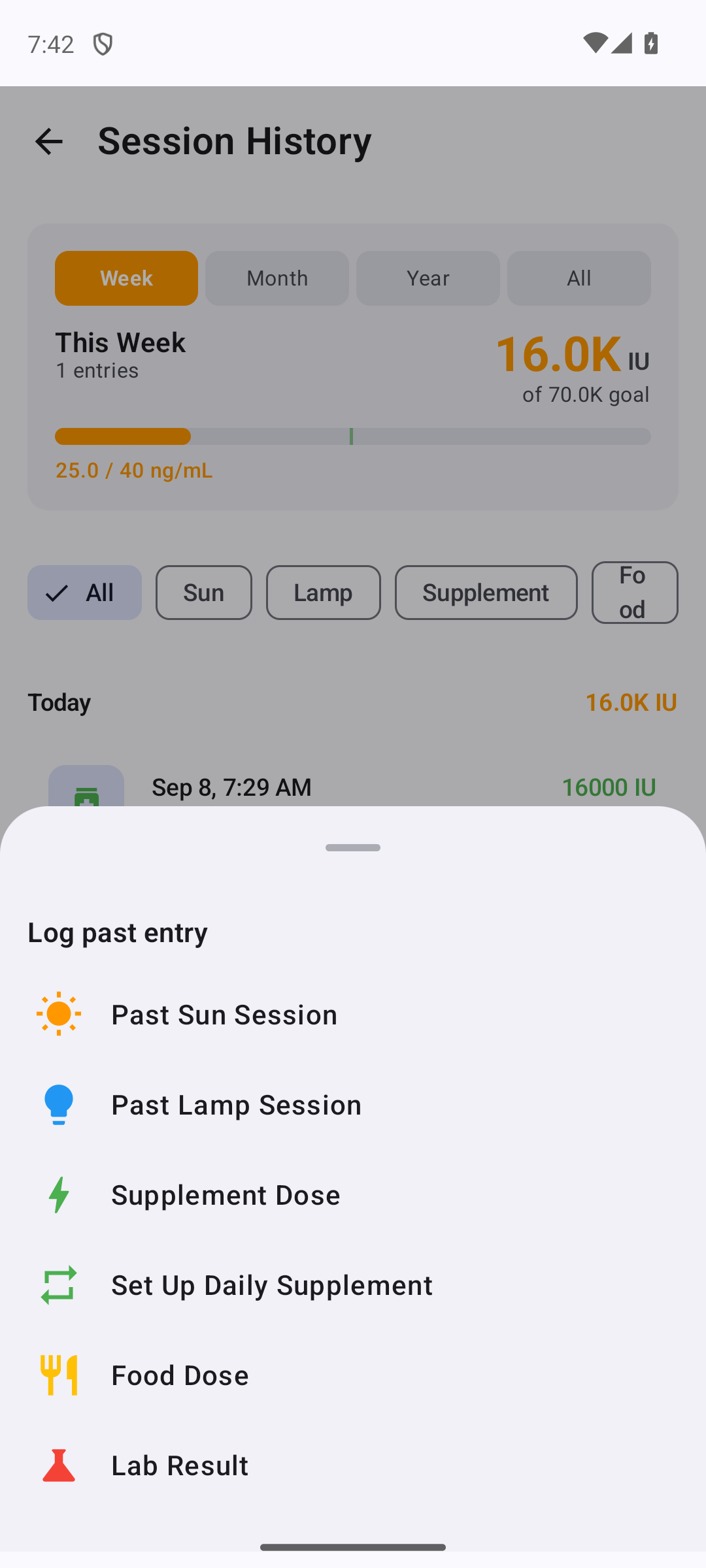
Open the add menu and choose "Supplement Dose"
On Android, open the History tab and tap the + button; on iOS, tap the + on the Home screen. Either way, choose Supplement Dose from the menu. This opens the single-dose form — the one for a dose you actually took.
The menu lists two supplement items on purpose: Supplement Dose for a one-off, and Set Up Daily Supplement for a recurring schedule. If you took a pill just now, you want the first one.
Enter the amount and save
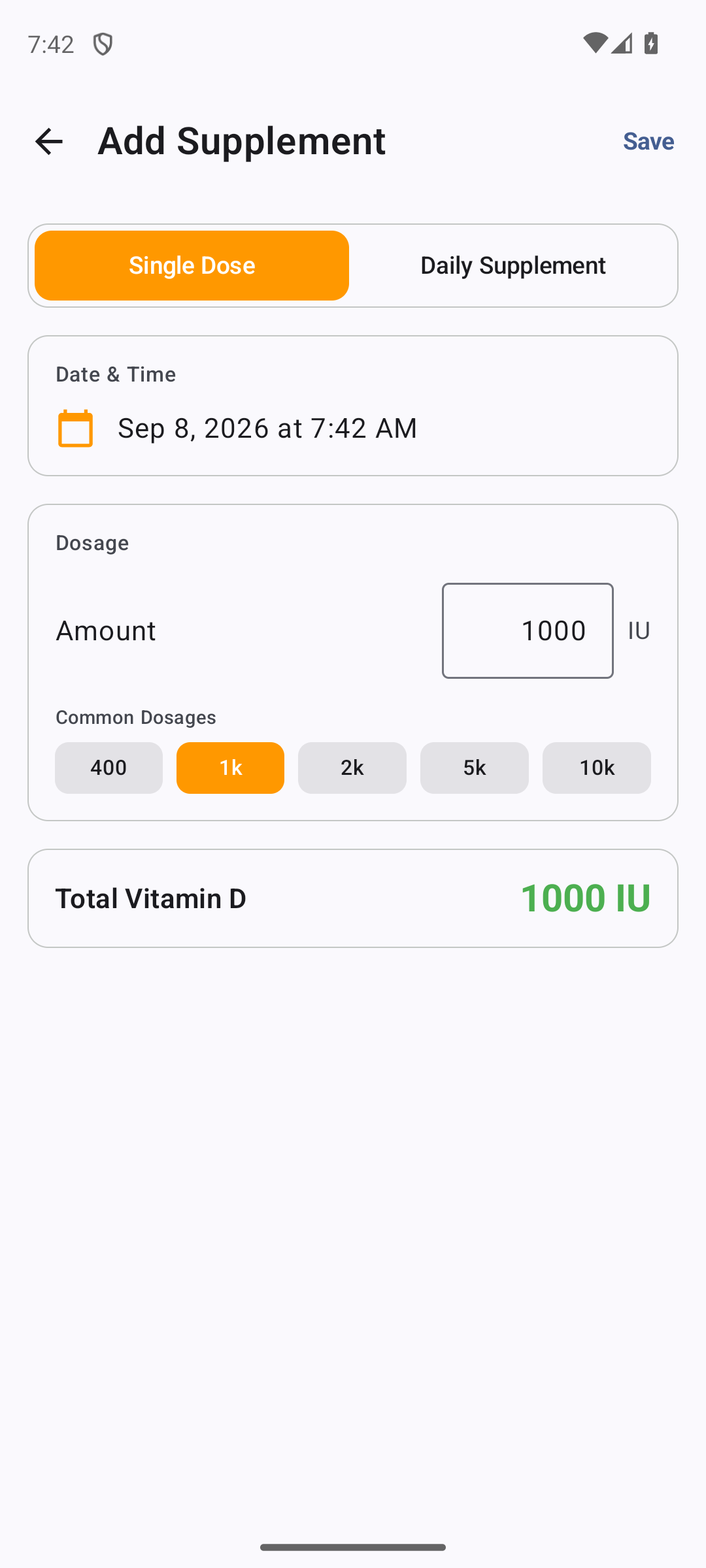
Type the amount in IU and tap Save. That's it — the dose is recorded on today's date as a single entry. A one-time prescription bolus like Hidroferol belongs here: you took it once, so it's logged once.
Made a mistake? Delete it from History
A one-off dose lives in your History like any other entry. If you typed the wrong number or picked the wrong day, delete the entry — and it stays gone. Because it was never a recurring rule, there is nothing behind it to regenerate the dose the next time you open the app.
Set up a daily supplement
For a supplement you take every day, a short wizard starts with the question you can actually answer — not "how many IU?" but "what do you take?"
Start the daily wizard
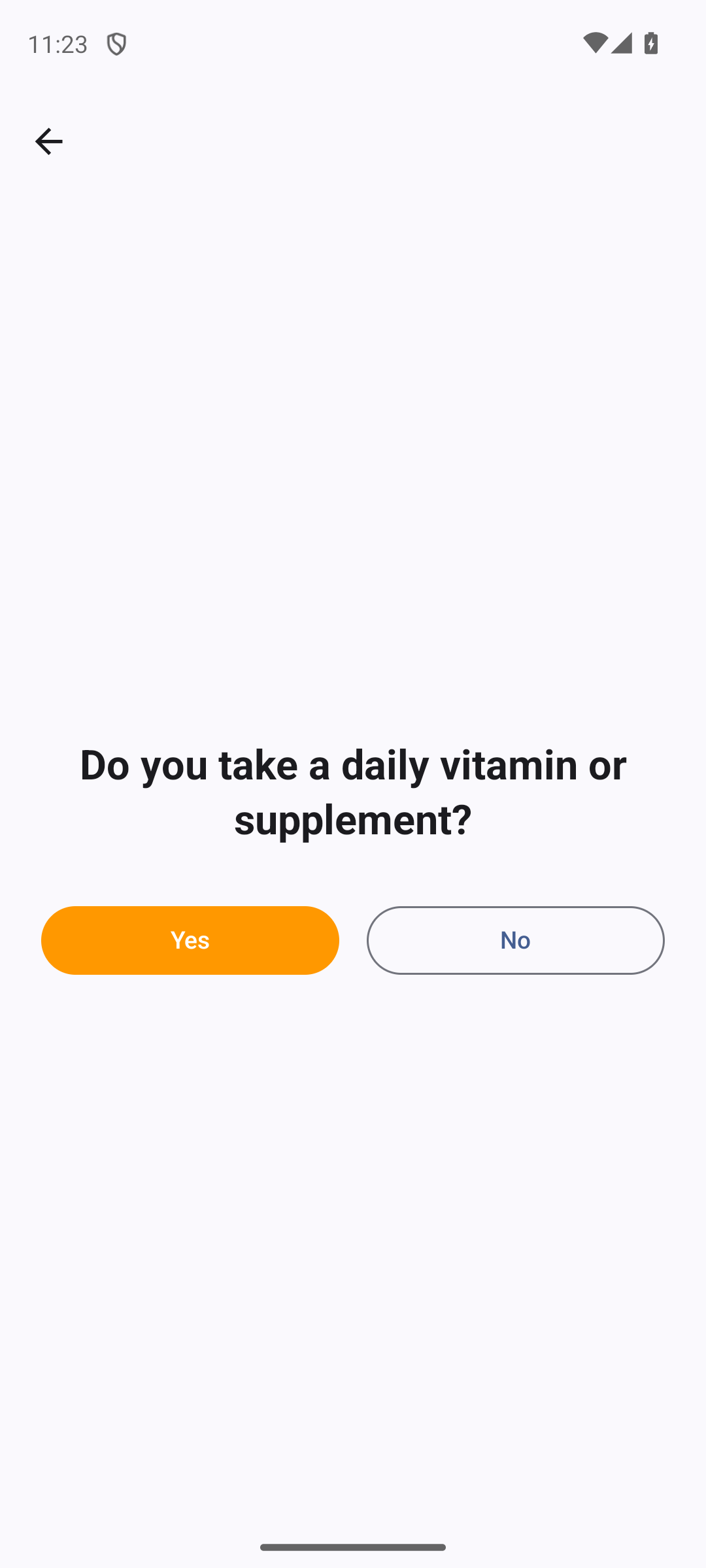
On Android, open the History + menu and choose Set Up Daily Supplement; on iOS, open Settings → Health & Data → Daily Supplements and add one. The wizard opens by asking "Do you take a daily vitamin or supplement?" — tap Yes to begin.
Pick what you take
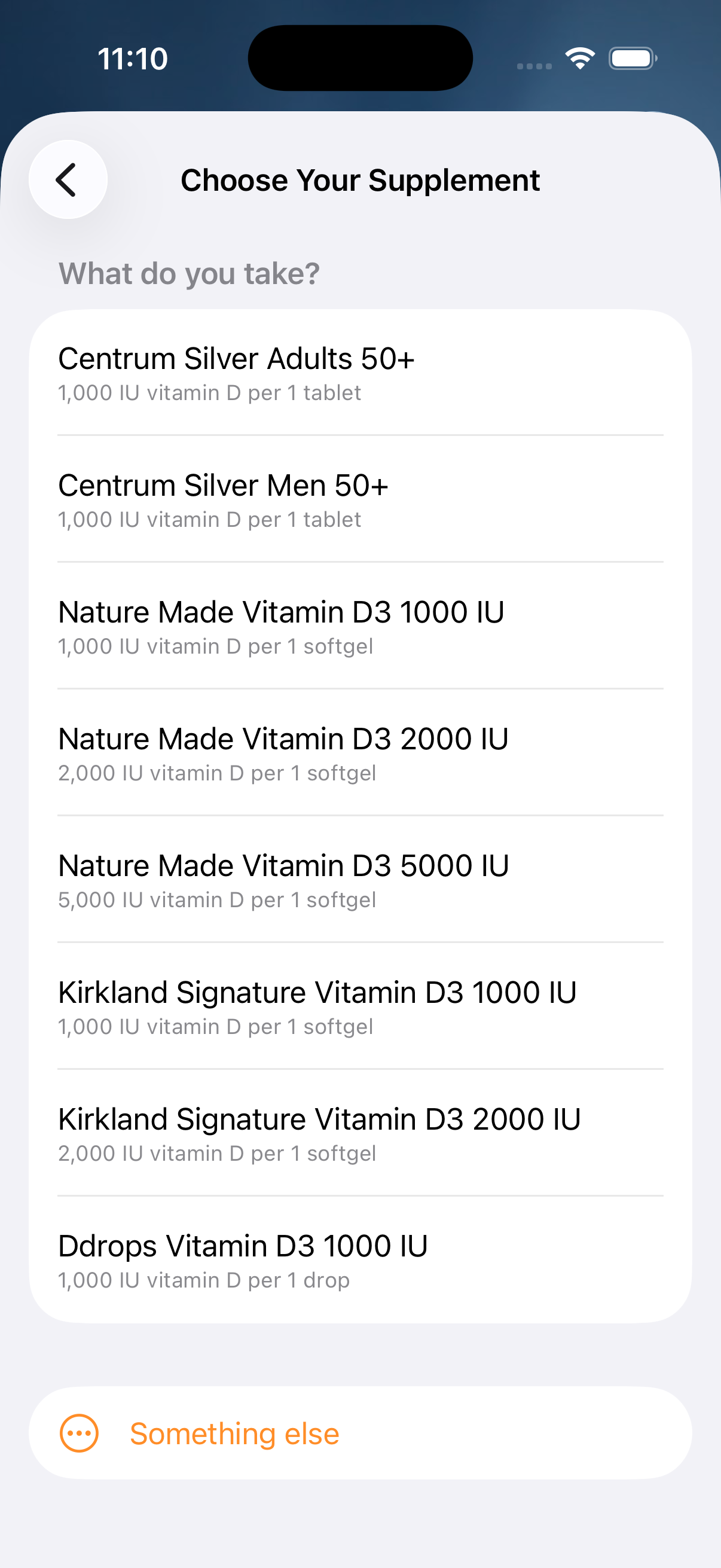
"What do you take?" Choose your product from the list and the label math is done for you — each product's IU-per-serving is taken from the manufacturer's own supplement facts, never guessed. Don't see yours? Pick Something else and enter the amount by hand.
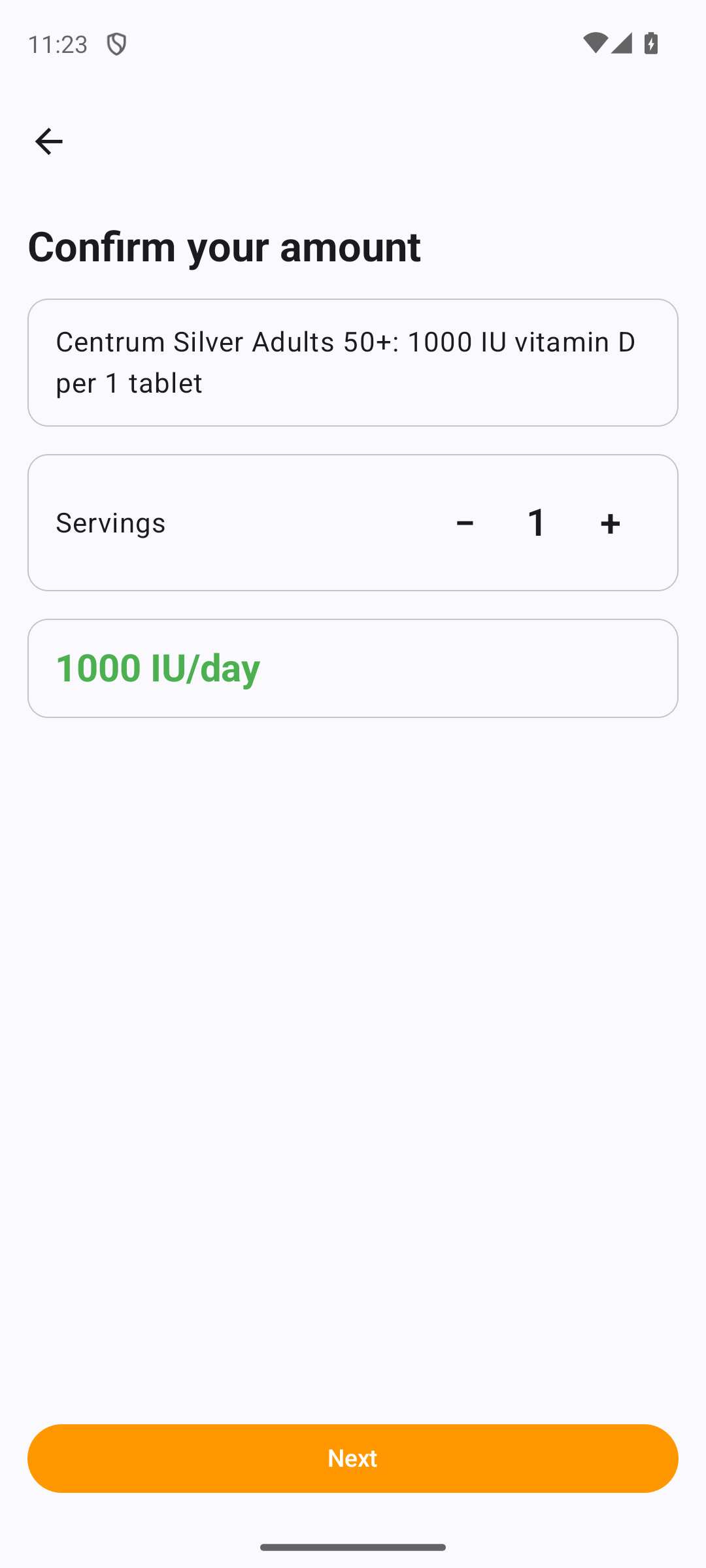
Confirm your amount
"Confirm your amount." Set how many servings you take, and the wizard shows the daily total it will log — for example 2 servings of a 1,000 IU softgel is 2,000 IU/day. Adjust the servings until the total matches what you actually take.
Choose when, and whether to be reminded
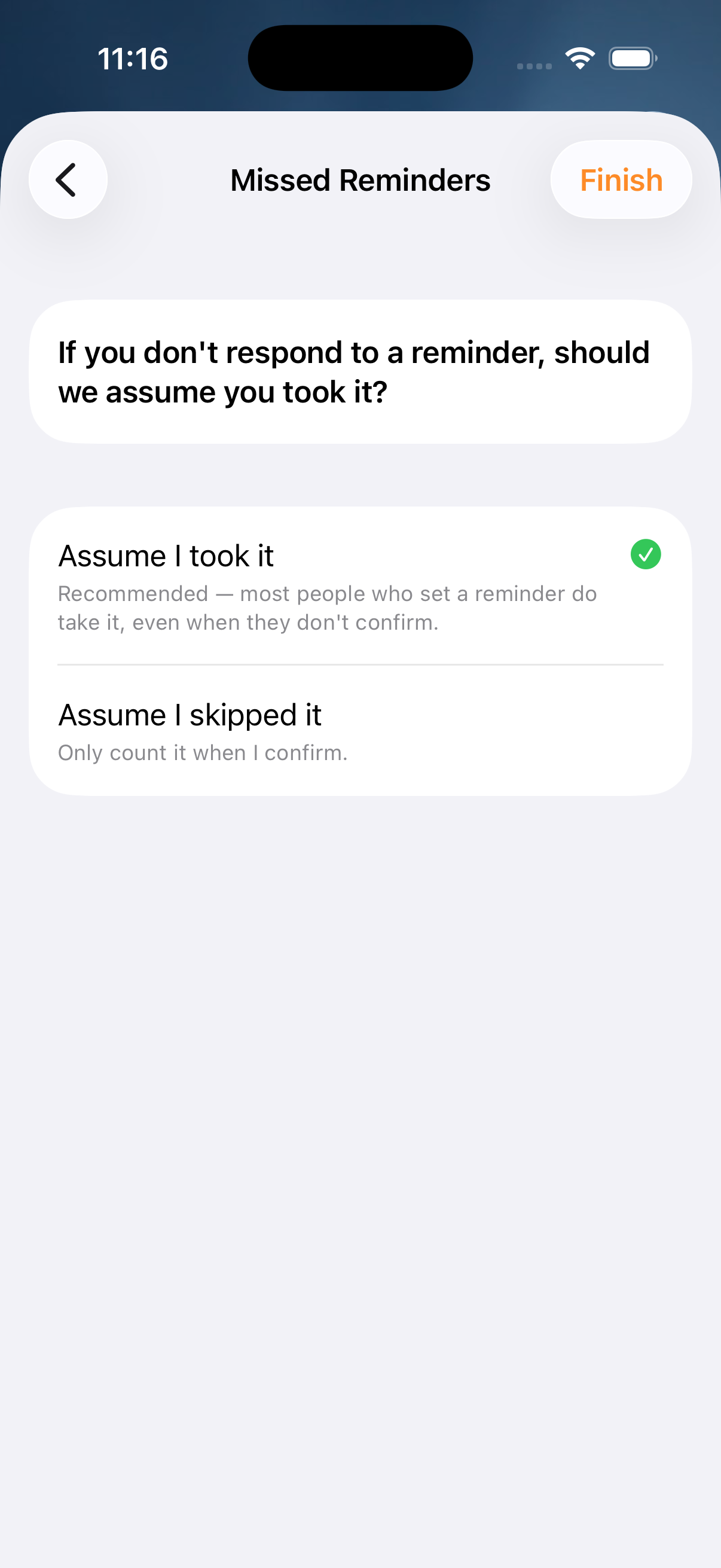
"When do you take it?" Pick the time of day. Turn on Remind me daily to get a nudge at that time. If you leave a reminder unanswered, the wizard asks whether it should assume you took it or skipped it — so your record stays honest either way.
Save — now it runs every day
Tap Save and the schedule is live. From now on it generates one supplement entry per day toward your goal, without you re-entering anything. Take a supplement at two different times? Set up a second schedule the same way — each time of day is its own schedule, and the day's total adds them together.
Manage or remove daily schedules
Every recurring rule lives in one stable place on both platforms — so a schedule you no longer want is always easy to find and delete.
Open Settings → Daily Supplements
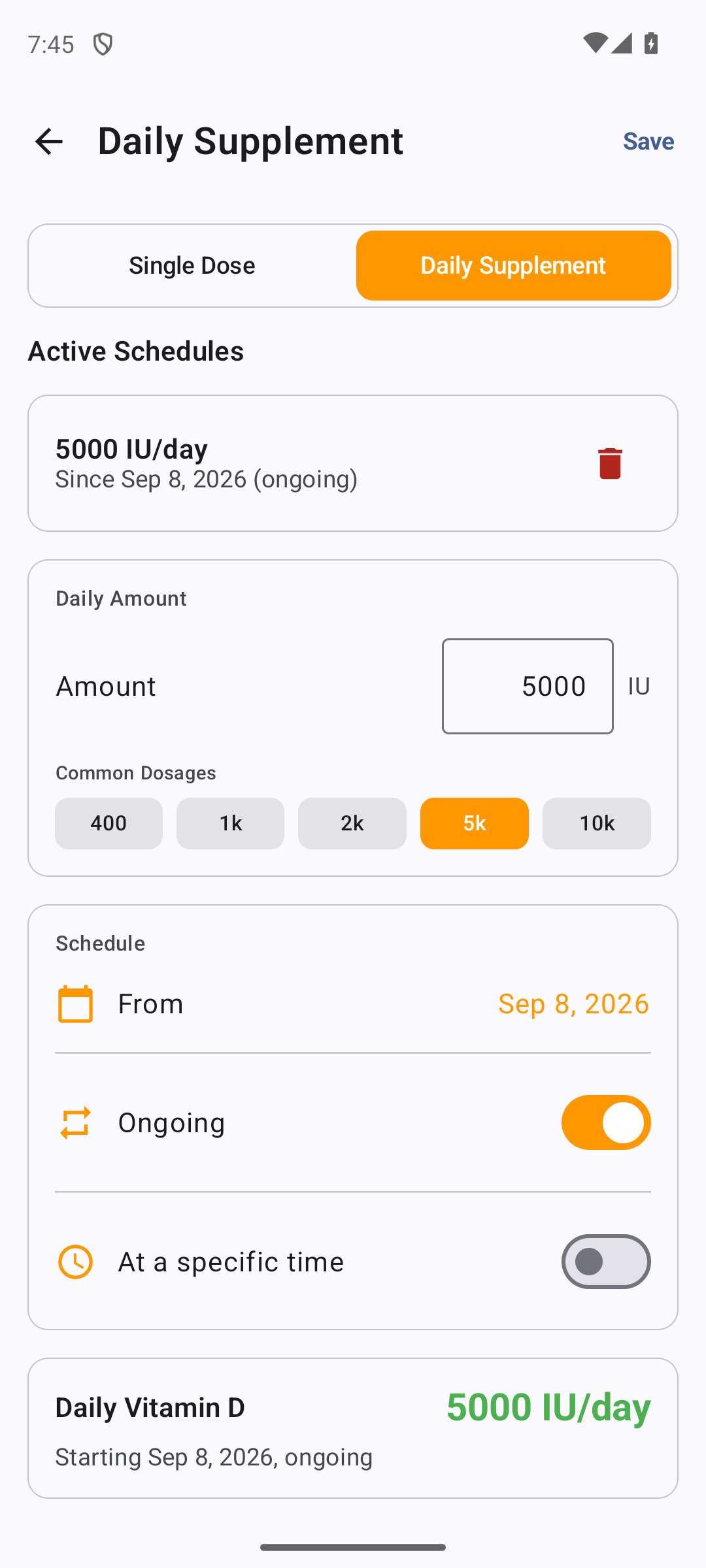
On Android it's Settings → Health → Daily Supplements; on iOS it's Settings → Health & Data → Daily Supplements. Both open the same thing: a list of your recurring schedules, each showing its amount and time, with a control to remove it.
Delete removes the rule for good
Deleting a schedule here stops it from generating any more daily entries. This is the right place to undo a schedule you set up by mistake — unlike deleting a single day's entry, removing the rule means the dose won't come back tomorrow.
Dose limits — what the app accepts, and why
D-Minder is a diary: if a clinician prescribed it, you should be able to record it. The limits exist only to catch typos, not to second-guess your prescription.
Single doses: up to 300,000 IU. High-dose repletion protocols are real medicine — 50,000 IU weekly is a standard US prescription, 60,000 IU weekly or fortnightly sachets are the standard protocol across India and much of Asia, and one-time 300,000 IU "stoss" repletion doses are used for severe deficiency. All of them record normally. Anything above 300,000 in one entry is almost certainly a slipped digit, so the app stops there.
Daily schedules: up to 10,000 IU per day. A daily schedule is ongoing intake, so it follows the Institute of Medicine's tolerable upper limit for continuous supplementation — a different question from a one-off prescribed bolus, which is exactly why the two have different ceilings.